Published · Commentary
Criterion A as Developmental Severity: Reclaiming the Psychodynamic Core of Personality Functioning
The central contribution
Personality functioning is best understood as an integrated developmental capacity rooted in psychodynamic theory, rather than merely a collection of correlated questionnaire domains.
The paper traces the developmental and psychodynamic roots of Criterion A, distinguishes structural integration from stylistic trait expression, addresses common psychometric critiques, and considers implications for treatment and future research.
Conceptual model
Structure develops before it is measured.
The framework treats personality functioning as an organized developmental capacity. Traits describe characteristic expression, but the quality of structural integration shapes how that expression becomes coherent, rigid, unstable, or clinically consequential.
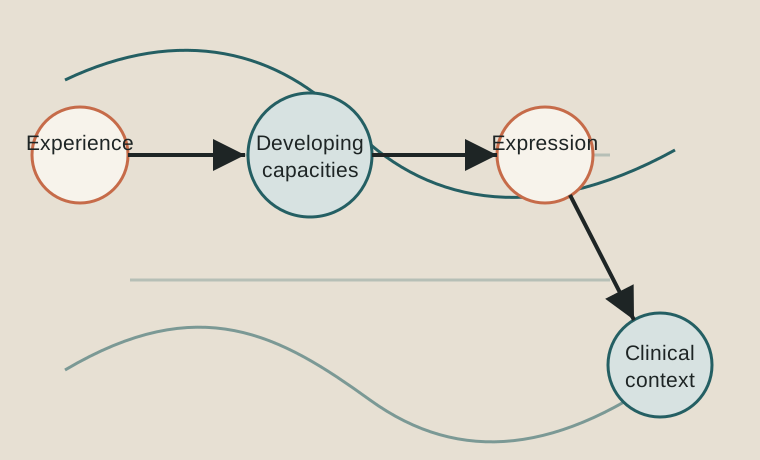
Developmental architecture
Six linked levels, not six interchangeable variables.
Each step changes the interpretation of the next.
- 01Early relational experience
- 02Developmental processes
- 03Criterion A structure
- 04Criterion B style
- 05Psychopathology
- 06Treatment implications
Why the work matters
Three ideas to carry forward.
The full methods and interpretation remain in the official article.
Criterion A is a structural construct
Identity, self-direction, empathy, and intimacy are presented as interdependent capacities, not isolated symptom counts.
Criterion B describes style
Traits help specify how personality is expressed, while Criterion A addresses the organization that makes that expression more or less adaptive.
Treatment decisions occur at two levels
Structural functioning can guide the frame and intensity of treatment, while traits can help identify specific intervention targets.
Formal citation
Gilbert, K. J. (2026). Criterion A as developmental severity: Reclaiming the psychodynamic core of personality functioning. Personality and Mental Health, 20(1), e70059.